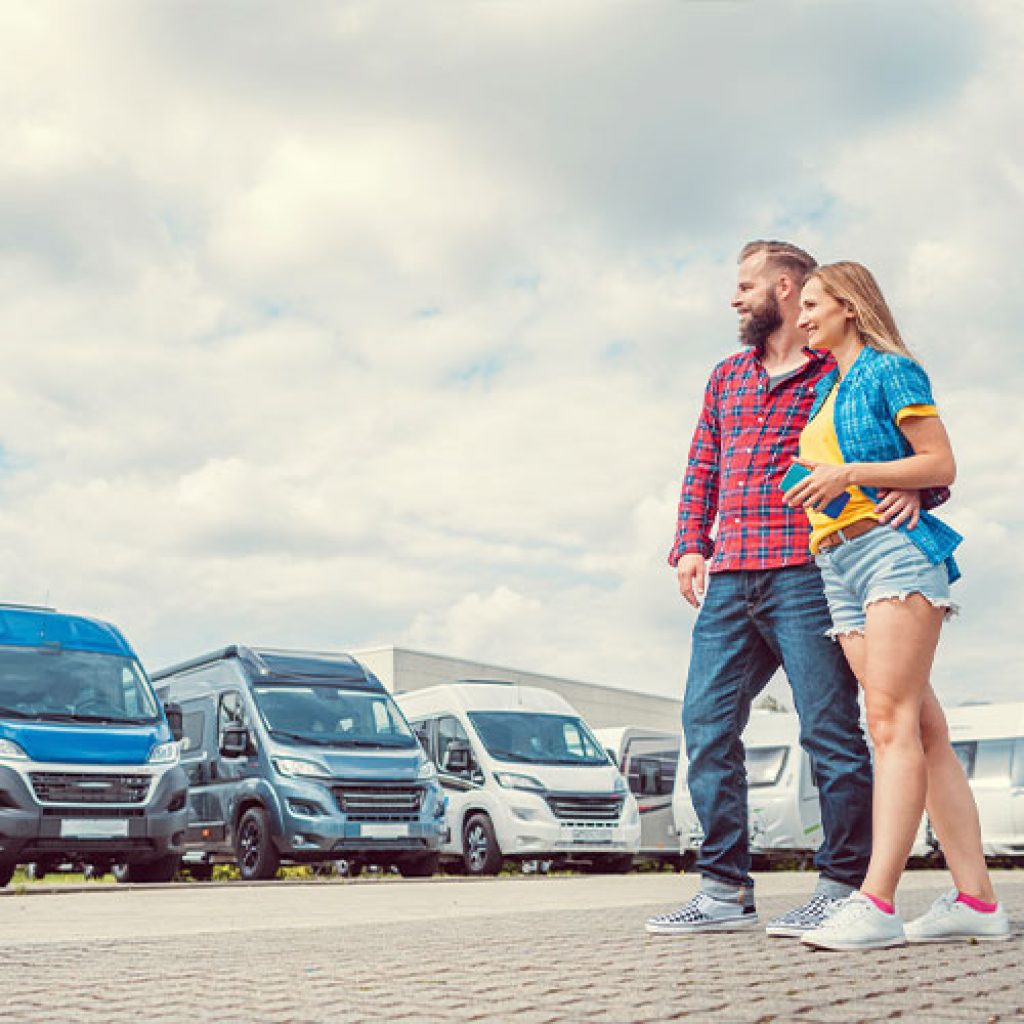
Good Company, Close Quarters – How Campervan Travel Brings People Closer
Written by: Moya Wilsenach
After eight days of cycling from Sydney to the Gold Coast, Tye Scott packed his bike into the
campervan for the drive home. He and his friends had covered roughly 1,000 kilometres and
raised $12,000 for children’s cancer. They had dealt with punctures and falls. Some days had
kept them on the road for around 12 hours with only short breaks along the way.
But leaving was what he calls “the saddest part of the trip.”
For eight days they had been working towards Queensland. Each night they stopped riding
and talked about what they had been through. Now, they had reached the finish and were
heading home.
“It was such a struggle and a journey to get there,” Tye says. “And then coming home was
just like oh, like it’s done, like back to reality.”
The ride had started as a joke between gym friends. After an earlier trip to Canberra they
suggested cycling to Queensland. About a year later they were doing it. Tye’s partner Olivia
Costanzo drove the support campervan with their food and spare equipment on board.
The first day did not go to plan. Tye fell while getting used to shoes that clipped into his
pedals. The riders became separated. When Cooper’s bike broke down, Kordell stayed with
him until Olivia could drive back to collect them. Tye ended up on a highway without a bike
lane as trucks passed close by.
They were also learning how to live together on the road. Packing and unpacking the
campervan took about three hours on the first day because nobody knew where everything
belonged. By the end of the trip they had worked out a routine.
The van gave them somewhere to eat and sleep between long days of riding. It carried the
spare tyres they kept needing and meant Olivia could collect anyone who could not keep
going. At night they sat around campfires and laughed about the day’s mishaps.
“Yeah, and struggling together, like we’re all going through the same pain,” Tye says when
asked what made the trip special.
“We’re all going through the same thing, and then we just have a big yarn at the end of the
day.”
They had known each other through training. Spending this much time together gave them
more to talk about. Tye remembers conversations about faith with Kordell and opening up
with the others.
“We’d have some like deep conversations,” he says. “We grew together as well. I feel.”
The days on the road also took them past farmland and beaches. Tye remembers the sunrises
and sunsets along the way and names Yamba as a favourite stop.
“Every day was a mad experience,” he says. “Like going into like a new area, seeing like the
farmland or the beaches, or it was mad.”
They made time to enjoy some of those places together between rides. Tye and Cooper went
fishing on a couple of days. The group also stopped for swims at Byron Bay and Yamba.
“We went for swims at Byron Bay and stuff like that, and Yamba. That was pretty nice,” Tye
says.
Time with friends and family is part of the appeal of camping for many people. In the UK’s
2022 Outjoyment Report, 52.4% of camper respondents agreed they camped to spend quality
time with friends. For family time the figure was 78.9% (Richards et al., 2022, p. 30). The
self-selected survey mainly reached camping-club members. These were their reasons for
going rather than proof that a trip improved their relationships.
Tye’s group had a charity ride to complete. Chloe Barlow was at a show jumping event. Both
describe appreciating the company of someone who understood what the day had involved.
Chloe spent two weeks at the event in Queensland with a friend. Usually she attended these
shows with her boss. This time she had someone alongside her to help with the work and sit
down with afterwards.
“You get to just sit there and debrief,” Chloe says. “They experience the same things that you
did.”
One day they were walking the horses back towards the campsite when shooting started at a
neighbouring gun club. It was something they talked about afterwards. Even when a day at
the show had gone badly, they could go over it together and find something to laugh about.
The friends had holidayed together before but had not shared a van. Chloe slept inside while
her friend used the rooftop tent. When one moved, the other could feel it through the vehicle.
Her friend had less protection from noise upstairs, but Chloe remembers them getting along
well.
Their conversations went beyond the competition. Both were having relationship trouble and
could talk about it over the two weeks.
“You see each other every day for like two weeks, so you definitely do have a lot of
conversations,” she says.
They would have talked about these things at home too. Being away gave them more chances
to return to a conversation and check in with each other. Chloe appreciated being able to
“share the experience and share the workload”.
Having someone’s attention can be an important part of that time away. A small UK study
explored four women’s camping experiences with friends and partners. Participants described
having time together without their usual distractions. One woman said of her partner: “I
literally have his undivided attention” (Morrow et al., 2014). Another described getting to
know a friend she had previously felt less close to. Four accounts cannot tell us what every
camper will experience. They do offer examples of how a trip can give people time to
reconnect.
That much company also means being around one another when everyone is tired. Tye’s
group had disagreements about riding speeds and staying together. Back at the campervan
they had to sort out meals and sleeping arrangements while keeping track of their equipment.
“You see the ins and outs of people in closed doors,” he says.
He appreciated being able to spend time in his own head while riding. At the van much more
of the day was shared.
“You just want your own space, eh?”
Olivia laughs when asked what sharing the van with the group of boys taught her.
“They taught me patience.”
Rose van Wagensveld and her partner also found they wanted different things at times during
their ten-day trip around New Zealand. They had been together for about two years and
already shared a small apartment. They knew each other’s habits. Away from home those
habits affected how they spent the holiday.
“If I’m somewhere new, I want to see it all,” Rose says.
Her partner preferred more time to relax. He was doing the driving and could be tired after
five or six hours behind the wheel. Rose wanted to keep exploring. Decisions about cooking
and whether to go out again sometimes became frustrating.
There was also the feeling that they had to make the holiday worth it.
“You spend money on this, and you have a short amount of time, so everything needs to be
perfect. You only have one chance.”
Sometimes Rose went for a walk while her partner rested. She could see more of the place
they had come to visit, and he could have a break. They did not need to spend every hour
doing the same thing.
Their setup was a four-wheel drive with a rooftop tent and a fridge and gas cooker in the
back. It was simple but had what they needed. Rose remembers the stress of long drives
alongside the pleasure of waking somewhere beautiful or going on a hike together.
One hike went ahead despite heavy rain. They were the only people there and wondered why
they were doing it. The weather had spoiled the view. Rose still enjoyed sharing the walk
with her partner.
“It just was fun, like doing it together,” she says.
Research into couples’ holidays suggests that trying something unfamiliar together can
matter. Two studies involving 238 individuals and 102 couples examined new and
challenging holiday experiences. The first linked these experiences with greater reported
passion and relationship satisfaction among people travelling with their partners (Coffey et
al., 2024).
The authors suggest that “small changes to any vacation could provide more opportunities for
self-expansion” (Coffey et al., 2024, p. 8). This involves opportunities to learn or experience
something new. It does not have to mean taking on an extreme challenge.
For Rose, the trip gave them a chance to explore somewhere unfamiliar to both of them.
“I think it brought us closer,” she says. “And something nice to look back on.”
Tye remembers seeing the Queensland sign and realising they had done it. They celebrated
with drinks and fireworks after eight days of riding.
“When it was finished, it’s like we could celebrate together,” he says.
Then he and Cooper took turns driving home. The journey that had taken days on their bikes
was over in hours.
The campervan had been their support base throughout the ride. For Chloe it had been
accommodation at the showgrounds and somewhere to spend the evenings with her friend.
Rose’s camping setup had let her explore New Zealand with her partner. Each trip gave them
time together that served a different purpose.
Chloe had someone to talk to after work who also knew what was happening in her personal
life. Rose and her partner worked around their different preferences and came home with
memories they could share. Tye’s friends knew what reaching Queensland had taken because
they had struggled through it beside him.
There were moments when they wanted space or wished the day had gone differently. Those
moments did not stop the trips from being worth taking. They gave the travellers something
to work out together and sometimes something to laugh about afterwards. By the time the
travellers were heading home, they had plenty of both.
Bibliography
Coffey, J. K., Shahvali, M., Kerstetter, D., & Aron, A. (2024). Couples vacations and
romantic passion and intimacy. Annals of Tourism Research Empirical Insights, 5, Article
100121. https://doi.org/10.1016/j.annale.2024.100121
Morrow, R., Rodriguez, A., & King, N. (2014). Camping: A tool for relationship
maintenance? Therapeutic Communities: The International Journal of Therapeutic
Communities, 35(2), 48–55. https://doi.org/10.1108/TC-12-2013-0034
Richards, K., Doran, A., Brett, C. E., Wingfield, H., & Schofield, P. (2022). The Outjoyment
report: A research report on the well-being and mental health benefits of camping. The
Camping and Caravanning Club. Report.