Campervan insurance is the part of booking that confuses people most. Every hire in Australia comes with basic cover, but that cover usually leaves you responsible for the first few thousand dollars of any damage. That amount is called the excess.
This guide explains how campervan hire insurance works in Australia, what the excess usually is, what you get when you pay to reduce it, and the things that often aren't covered at all. Read it before you book and you won't get any surprises at the depot.
How campervan hire insurance works
When you hire a campervan or motorhome in Australia, the price includes standard cover, sometimes called liability cover or damage cover. It means the hire company pays for damage to the van and to other people's property, but only after you've paid the excess.
Think of the excess as the most you'd have to pay if something goes wrong. Scrape the side of the van on a petrol station pole and the repair costs $1,200? You pay $1,200. Have a bigger accident and the repair costs $15,000? You pay the excess and the rest is covered.
In most cases the excess applies whether or not the accident was your fault. If another driver is to blame, you may get the money back later, but that can take months.
How much is the excess on a campervan in Australia?
It depends on the company and the size of the vehicle. A typical campervan excess in Australia is around $3,000 to $7,500, and larger motorhomes can go over $10,000.
As an example, these are the published options from JUCY, one of the operators we compare, for Australian bookings made from 1 May 2026:
| Vehicle | Cover option | Cost per day | Excess |
|---|---|---|---|
| Crib+ and Cloudbreak | Risk Taker | $0 | $3,000 |
| Crib+ and Cloudbreak | Comprehensive | $50 | $0 |
| Coaster, Condo and Malibu | Risk Taker | $0 | $5,000 |
| Big Kahuna | Risk Taker | $0 | $7,500 |
| Big Kahuna | Comprehensive | $75 | $0 |
Other companies use different names and prices, so always check the cover table for the exact vehicle you're booking. When you compare campervans with us, our team can tell you the excess for each option before you pay.
Excess reduction: what you pay and what you get
Almost every hire company sells excess reduction. You pay a daily fee and your excess drops, sometimes all the way to $0. Many packages also bundle in extras like camping chairs, a table or an extra driver.
Things to know before you buy it
- It's charged per day, so it adds up on a long trip. Some companies cap the charge, for example at 50 days.
- Your bond usually drops too. With JUCY's comprehensive option, the damage bond goes from thousands of dollars to $0.
- Bigger vehicles cost more to cover, and 4WDs are often at the top of the price range.
- A claims or admin fee may still apply if you do have an accident.
What campervan insurance often doesn't cover
This is where most people get caught out. Even with full cover, some types of damage may be excluded or only partly covered. Some excess reduction products exclude overhead, underbody or single-vehicle accidents. Common examples to check for:
- Overhead and roof damage, like hitting a low carpark roof, tree branch or awning
- Underbody damage from rocks, kerbs or deep potholes
- Single-vehicle accidents and rollovers
- Water damage from driving through flooded roads or creeks
- Driving on unsealed roads or beaches the company doesn't allow
- Damage caused by a driver who isn't listed on the rental agreement
- Anything that happens while driving under the influence of alcohol or drugs
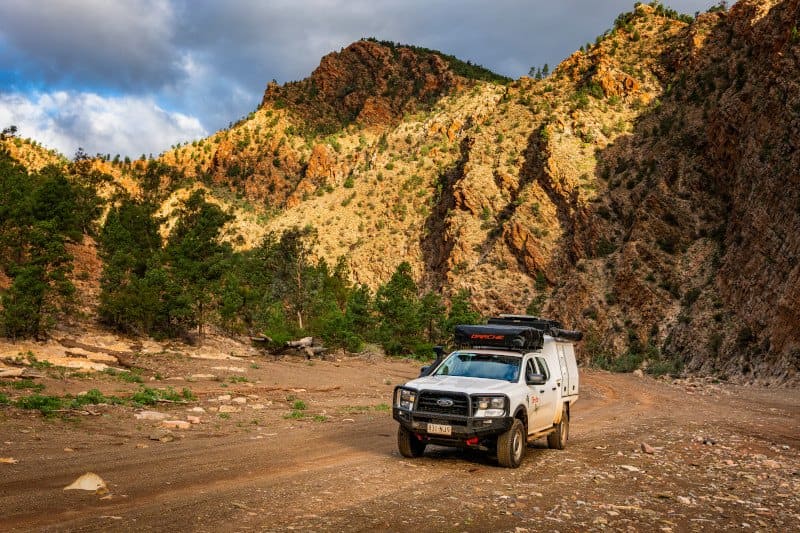
If you plan to head onto dirt roads, you'll usually need a 4WD camper that is approved for those roads. A standard campervan on an unsealed road is one of the most common ways people end up uninsured.
Bond vs excess: what's the difference?
The bond is money held on your card when you pick up the van, usually by placing a hold on your credit card. It's there so the company can recover the excess, tolls, fines or extra fees if needed. The excess is the maximum you'd pay for damage.
The two are linked. A higher excess usually means a higher bond, and reducing the excess usually reduces the bond. We explain bonds in more detail in our guide to campervan rental bonds.
Campervan rental bond in Australia explained→Can you use travel insurance instead?
Some travel insurance policies and standalone products include rental vehicle excess cover. These can be cheaper than the hire company's reduction, but they work differently.
- You pay the excess to the hire company first, then claim it back from your insurer.
- The hire company still holds the full bond, so you need enough credit on your card.
- Not every policy covers campervans or motorhomes. Some only cover cars, or cap the amount they'll pay.
- Check the vehicle size and type limits in the policy wording before you rely on it.
How to choose the right campervan cover
- Look up the excess for your exact vehicle, not just the company.
- Work out the total cost of excess reduction for your trip length.
- Read the exclusions list, especially overhead, underbody and unsealed road rules.
- Make sure every driver is added to the rental agreement.
- Take photos and video of the van at pick-up, including the roof and underneath if you can.
- Keep enough credit on your card for the bond and any late toll charges.
If you're still unsure, ask us. We compare campervans from trusted suppliers across Australia and New Zealand, and we can explain each company's insurance options in plain English.
Frequently Asked Questions
Is insurance included in campervan hire in Australia?
Yes, basic cover is included in the hire price, but it comes with an excess. You pay for damage up to the excess amount unless you buy excess reduction.
How much is the excess on a campervan hire?
It varies by company and vehicle. Typical figures are around $3,000 to $7,500, and large motorhomes can be higher.
Does excess reduction cover everything?
Not always. Some products exclude or limit overhead damage, underbody damage, single-vehicle accidents, water damage or driving on roads the company doesn't allow. Check the terms for your vehicle.
Is it cheaper to buy rental excess cover from a travel insurer?
It can be, but you'll usually need to pay the excess first and claim it back, and the hire company will still hold a full bond on your card.
Ready to start your trip?
Compare campervans and motorhomes from trusted operators, with the best rates in one place.
Find a Campervan Now