Driving in New Zealand is a highlight of any trip, but it catches a lot of visitors out. The roads are narrower and twistier than many people expect, the weather changes fast, and a drive that looks short on the map can take most of a day.
Here's what you need to know before driving a campervan in New Zealand, from licence rules to one-lane bridges.
Can you drive in New Zealand on an overseas licence?
Yes. According to Tourism New Zealand, visitors can drive for up to 18 months on a current overseas driver licence. If you're using an International Driving Permit, it's valid for up to 12 months, and you must carry the licence it's based on as well.
- If your licence isn't in English, you need an accurate English translation or an IDP.
- Carry your licence or permit whenever you drive.
- You can only drive the types of vehicle your licence covers at home.
Driving without an acceptable translation can mean a NZ$400 infringement fee, and police can stop an unlicensed driver from driving.
Driving licences and permits on Tourism New Zealand→Keep left
New Zealand drives on the left, like Australia and the UK. If you're used to driving on the right, the first few turns and roundabouts take some concentration. A good trick: as the driver, you should always be next to the centre line.
Roads take longer than you think
Many highways are a single lane each way, with hills, tight bends and few places to overtake. In a campervan, you'll often drive slower than the speed limit, and that's fine.
- Plan on roughly 60 to 70 km an hour on winding roads, not the posted limit.
- Use the slow vehicle bays and pull over to let traffic past.
- Never stop on the road to take photos. Use a lookout or pull-off.
- Take a break every two hours or so.
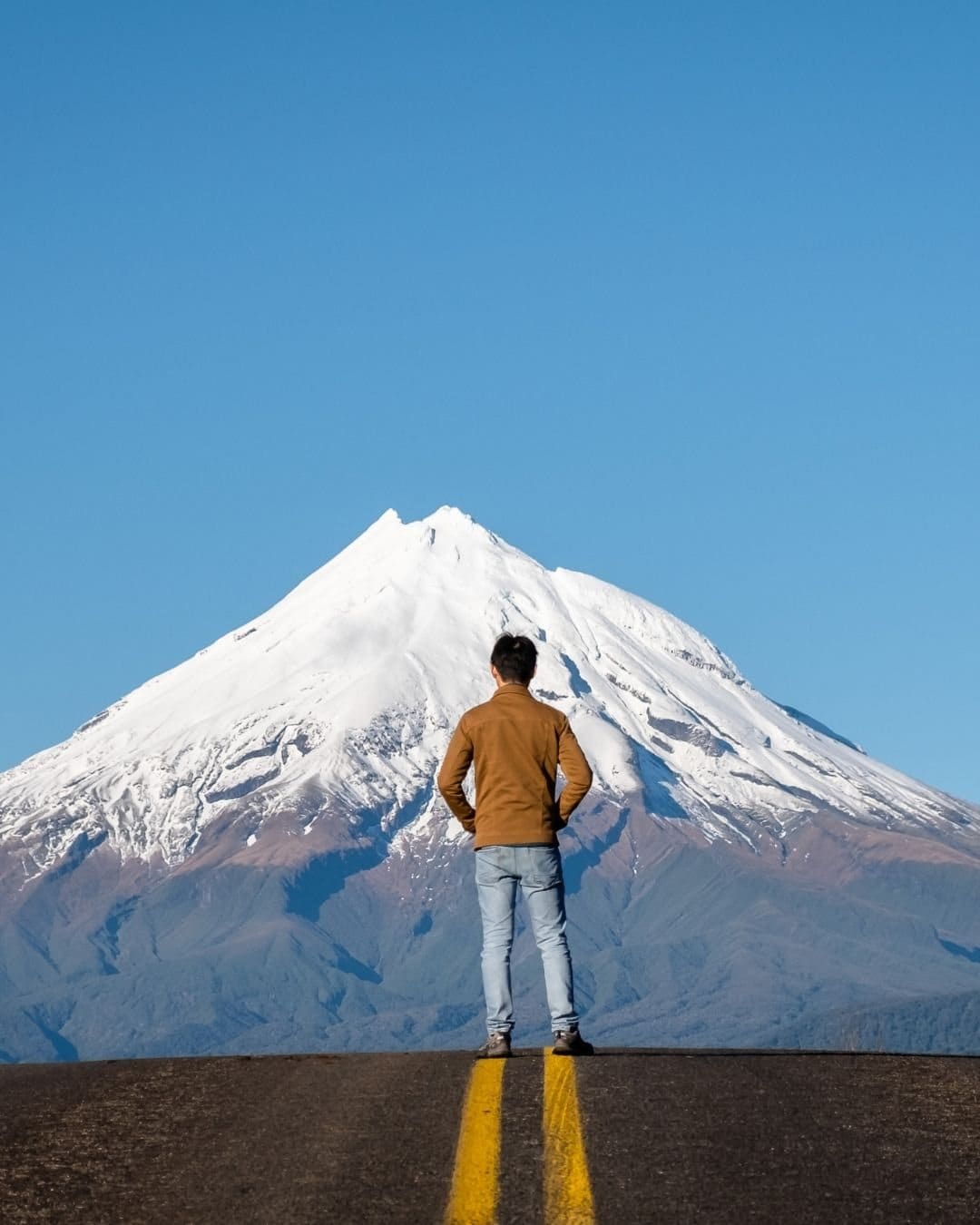
One-lane bridges
New Zealand has hundreds of one-lane bridges, especially on the West Coast and in rural areas. A sign before each bridge tells you who gives way. A round sign with a red border means you give way to traffic coming the other way. A blue rectangular sign means you have priority, but slow down and check anyway.
Mountain roads and winter driving
Some alpine roads, like the Milford Road and the Crown Range Road near Queenstown, can be affected by snow and ice in winter. Roads can close at short notice, and chains may be required.
- Check road conditions and closures before you set off.
- Ask your hire company whether snow chains are included or available.
- Drive slowly on frosty mornings, especially in shaded corners.
Other road rules to know
- Everyone in the vehicle must wear a seatbelt.
- Using a handheld mobile phone while driving is illegal.
- Drink driving limits are strict, and there's a zero limit for drivers under 20.
- Railway crossings are common in rural areas. Stop if the lights are flashing.
The NZ road code covers all the rules, and there are free road code quizzes you can try before you go.
The official New Zealand road code→Fuel, cyclists and livestock
Petrol stations can be far apart in rural areas and on mountain passes, and some small-town stations close in the evening. Fill up whenever you're under half a tank.
You'll share the road with cyclists, logging trucks and, on country roads, sheep and cattle being moved between paddocks. Slow right down, give cyclists plenty of room and wait patiently for stock to pass.
Campervans are taller and wider than cars, so watch for low branches at campsites and take corners wide. If you've never driven anything bigger than a car, the first day is the hardest.
Driving times between popular places
These are rough guides without stops. In a campervan, add extra time.
| Route | Approx. driving time |
|---|---|
| Auckland to Rotorua | About 3 hours |
| Rotorua to Taupo | About 1 hour |
| Christchurch to Lake Tekapo | About 3 hours |
| Queenstown to Te Anau | About 2 hours |
| Te Anau to Milford Sound | About 2 hours |
Our itineraries give day-by-day drive times for each route.
Christchurch to Queenstown itinerary→Queenstown to Milford Sound itinerary→Where to stop overnight
Freedom camping is only allowed in certain places, and many spots are for certified self-contained vehicles only. Campgrounds, holiday parks and DOC campsites are always an option.
Freedom camping rules in New Zealand→Frequently Asked Questions
Can I drive in New Zealand with my overseas licence?
Yes, for up to 18 months on a current overseas licence, or 12 months on an International Driving Permit. You need an English translation or IDP if your licence isn't in English.
Is it hard to drive a campervan in New Zealand?
It's not hard, but roads are narrow and winding, so drive slower than the limit, use slow vehicle bays and plan shorter driving days.
Which side of the road do you drive on in New Zealand?
The left.
Do I need snow chains in New Zealand?
Only on some alpine roads in winter. Ask your hire company and check road conditions before you go.
Ready to start your trip?
Compare campervans and motorhomes from trusted operators, with the best rates in one place.
Find a Campervan Now