New Zealand packs mountains, fjords, glaciers, beaches, hot springs and volcanoes into two islands you can drive end to end in a couple of weeks. Travelling New Zealand by campervan lets you stop wherever the view is best, and this guide helps you build a New Zealand campervan itinerary: where to go, when to travel, the best road trips and how campervan hire works.
Australian Backpackers is a campervan comparison and booking agency. We don't own the vehicles: we compare campervans and motorhomes from rental companies in New Zealand, so you can see the options side by side and book the one that suits your trip.
New Zealand at a glance for campervan travellers
| Good to know | Details |
|---|---|
| Size | About 268,000 km² across the North and South Islands |
| Driving | On the left. Roads are winding, so allow more time than the distance suggests |
| Seasons | Reversed from the northern hemisphere. Summer is December to February |
| Currency | New Zealand dollar (NZD) |
| Campervan pick-up cities | Auckland, Christchurch and Queenstown |
| Best for | Scenery, hiking, adventure activities and road trips |
New Zealand is smaller than it looks on a map but slow to drive. A route that looks like three hours can easily take five once you stop for photos, so plan shorter driving days than you would elsewhere.
Best time to visit New Zealand by campervan
- Summer (December to February): warmest and busiest, best for beaches and long days
- Autumn (March to May): quieter roads and golden colours around Queenstown and Wanaka
- Winter (June to August): snow in the south and ski fields open, with campervan hire usually cheaper
- Spring (September to November): waterfalls, lambs and fewer crowds
Summer has the best weather and the most demand. If you're travelling between December and February, book early for the widest choice of campervans.
Best places to visit in New Zealand
- Bay of Islands: sailing, snorkelling and early history around Paihia and Russell
- Auckland: a harbour city with volcanic islands and good food
- Waitomo Caves: glow worms in the dark
- Rotorua: geothermal parks, hot pools and Māori culture
- Tongariro Alpine Crossing: one of the best day walks in the world
- Wellington: a compact capital with great coffee and the Te Papa museum
- Abel Tasman National Park: golden beaches and clear water
- Franz Josef and Fox Glacier: walk or heli-hike on the ice
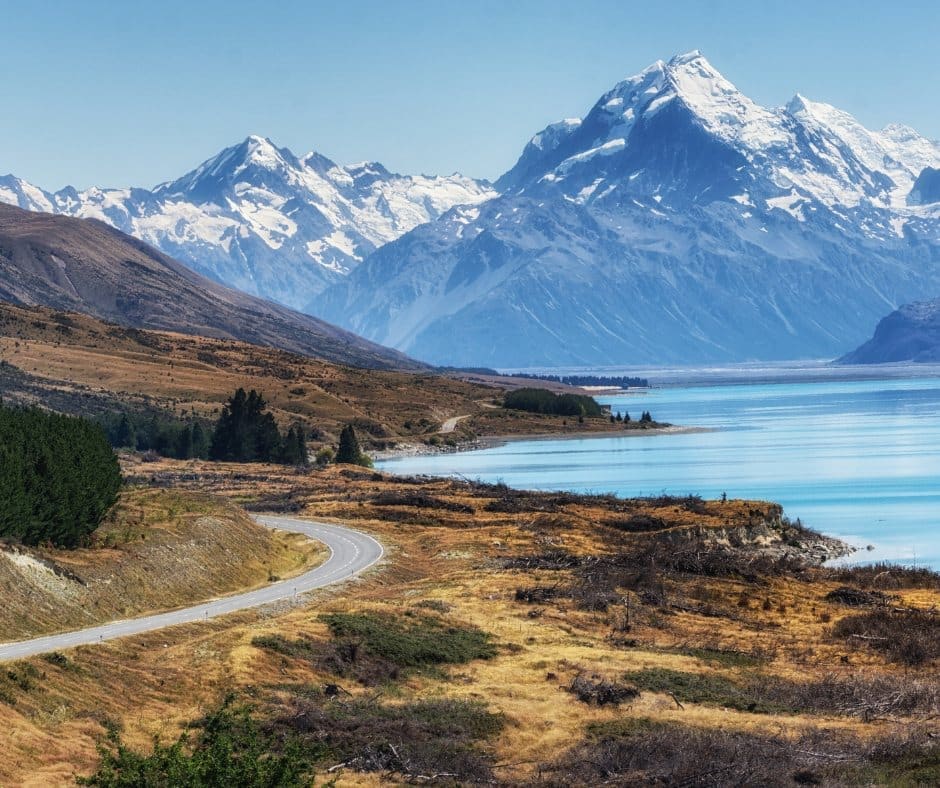
- Aoraki Mount Cook and Lake Tekapo: the country's tallest peak and famously dark night skies
- Queenstown and Wanaka: lakes, mountains and adventure activities
- Milford Sound and Fiordland: waterfalls and cliffs that drop straight into the water
- Kaikōura: whales, dolphins and seafood on the coast
New Zealand road trip itineraries to start with
- Christchurch to Queenstown via Lake Tekapo and Mount Cook: roughly 480 km, allow 3 to 4 days
- Queenstown to Mount Cook: about 3 hours each way through the Lindis Pass, best with a night near the mountain
- Queenstown to Milford Sound: around 4 hours each way, best with an overnight stop in Te Anau
- Auckland to the Bay of Islands and back: a relaxed week of beaches and bays in the north
- Auckland to Rotorua and Taupō: geothermal country, lakes and the Tongariro Crossing in 5 to 7 days
Two to three weeks is enough for a New Zealand road trip itinerary that covers both islands. Many travellers pick up in one city and drop off in another, taking the Interislander or Bluebridge ferry across Cook Strait.
Best road trips in New Zealand by campervan→Christchurch to Queenstown campervan itinerary→Taking a campervan on the Cook Strait ferry→How campervan hire in New Zealand works
You pick up a campervan or motorhome in Auckland, Christchurch or Queenstown and return it at the end of your trip, either to the same city or another one. Australian Backpackers compares campervan rentals from several New Zealand suppliers in one place, from budget campervans for backpackers to family motorhomes, and discounts apply automatically when you book through us.
- One way hire between the islands or within the South Island is common. Some suppliers charge a one way fee on certain routes
- Self-contained campervans give you more choice of where to stay overnight
- Age, bond, insurance excess and what's included vary between rental companies, so compare these as well as the price
- If your licence isn't in English you'll usually need an International Driving Permit or an approved translation
Tips before you go
- Freedom camping is only allowed in certain places, and many require a certified self-contained vehicle. Use signed sites, campgrounds or holiday parks, as councils fine people who camp elsewhere
- Mountain weather changes fast. Pack layers and check road conditions before long drives
- Sandflies are common on the West Coast and in Fiordland, so bring repellent
- Allow extra time for winding roads and avoid long driving days
- In winter, check whether snow chains are needed for alpine roads
Frequently Asked Questions
How many days do I need for a New Zealand campervan trip?
About ten days covers one island at a comfortable pace. Two to three weeks lets you see the highlights of both the North and South Islands, including the ferry crossing. Roads are winding, so plan shorter driving days than the distances suggest.
Is New Zealand good for a campervan trip?
Yes, it's one of the best countries for it. Distances are short, the scenery changes constantly and there are campgrounds and holiday parks across both islands. A campervan also saves you packing up and moving hotels every night.
What is the best time to visit New Zealand by campervan?
Summer (December to February) is warmest and busiest. Autumn and spring are quieter and still good for driving, and winter suits skiing, with campervan hire usually cheaper. Book early for summer travel.
Which island is better for a campervan, North or South?
The South Island is the most popular for a campervan trip, with mountains, lakes, glaciers and Fiordland. The North Island has beaches, geothermal areas and Māori culture. With two to three weeks you can do both.
Can I freedom camp in New Zealand?
Only in permitted areas, and many of them require a certified self-contained vehicle. Check local signs and council rules, or stay at campgrounds and holiday parks. Camping in the wrong place can lead to a fine.
Do I need an international driving permit in New Zealand?
If your licence isn't in English, you'll usually need an International Driving Permit or an approved translation. Requirements can vary by rental company, so check before you book.
Ready to start your trip?
Compare campervans and motorhomes from trusted operators, with the best rates in one place.
Find a Campervan Now